
The United States has refused to confirm the death of Harkatul Jihad al-Islami chief Ilyas Kashmiri in a recent drone strike in Pakistan's South Waziristan region.
Harkatul Jihad al-Islami chief Ilyas Kashmiri, who was killed in a United States drone attack in Pakistan's South Waziristan region, had reportedly convened a meeting in North Waziristan last month to constitute a special squad that would be tasked with avenging the death of Al Qaeda chief Osama bin Laden.
A Bangaldesh court has remanded Sheikh Abdus Salam, founder of banned Harkatul Jihad al Islami, to six-day police custody after he was arrested for his alleged involvement in the 2004 grenade attack on Bangladesh Prime Minister Sheikh Hasina.
Akhtar, who is linked to Al Qaeda chief Osama bin Laden and was head of the outlawed Harkatul Jihad al-Islami, fought along with the mujahideen during the Soviet occupation of Afghanistan in the 1980s. He also trained Jehadi fighters who were sent to Jammu and Kashmir during the 1990s.
Their arrest comes amidst intelligence inputs of terrorist designs to carry out strikes in the capital during the celebrations.

Fourteen Islamist militants were on Tuesday given death sentence by a Bangladeshi court here for attempting to kill Prime Minister Sheikh Hasina in 2000.

Rahman, 50, was tried in absentia with the court declaring him a "fugitive". He now lives in London where he is believed to have sought asylum though the British authorities have declined to reveal his immigration status.

Bangladesh on Monday banned an Islamist militant outfit that is believed to be behind the gruesome hacking deaths of three secular bloggers.

Seeking to wriggle out of the FATF's grey list, Pakistan has imposed tough financial sanctions on 88 banned terror groups and their leaders, including Hafiz Saeed, Masood Azhar and Dawood Ibrahim, by ordering the seizure of all of their properties and freezing of bank accounts, a media report said.

Dawood Ibrahim is wanted in India to face the law of the land for carrying out serial blasts in Mumbai in 1993 in which scores of people were killed and injured.
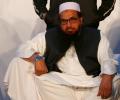
The perpetrators of the 2008 Mumbai attack, who shot dead 166 people, had confessed to details that should have been enough to hang him, but Pakistan enjoyed his anti-India rhetoric and let him spread his tentacles. A revealing excerpt from Khaled Ahmed's Pakistan's Terror Conundrum.
